Fast iteration
Run a single step against real data without executing the whole pipeline. See what came out, adjust, and run it again — the loop is seconds, not a redeploy.
The Monday refresh, the month-end pack, the "can you just check" request — turned into scheduled jobs that rerun themselves and tell you when something moved.
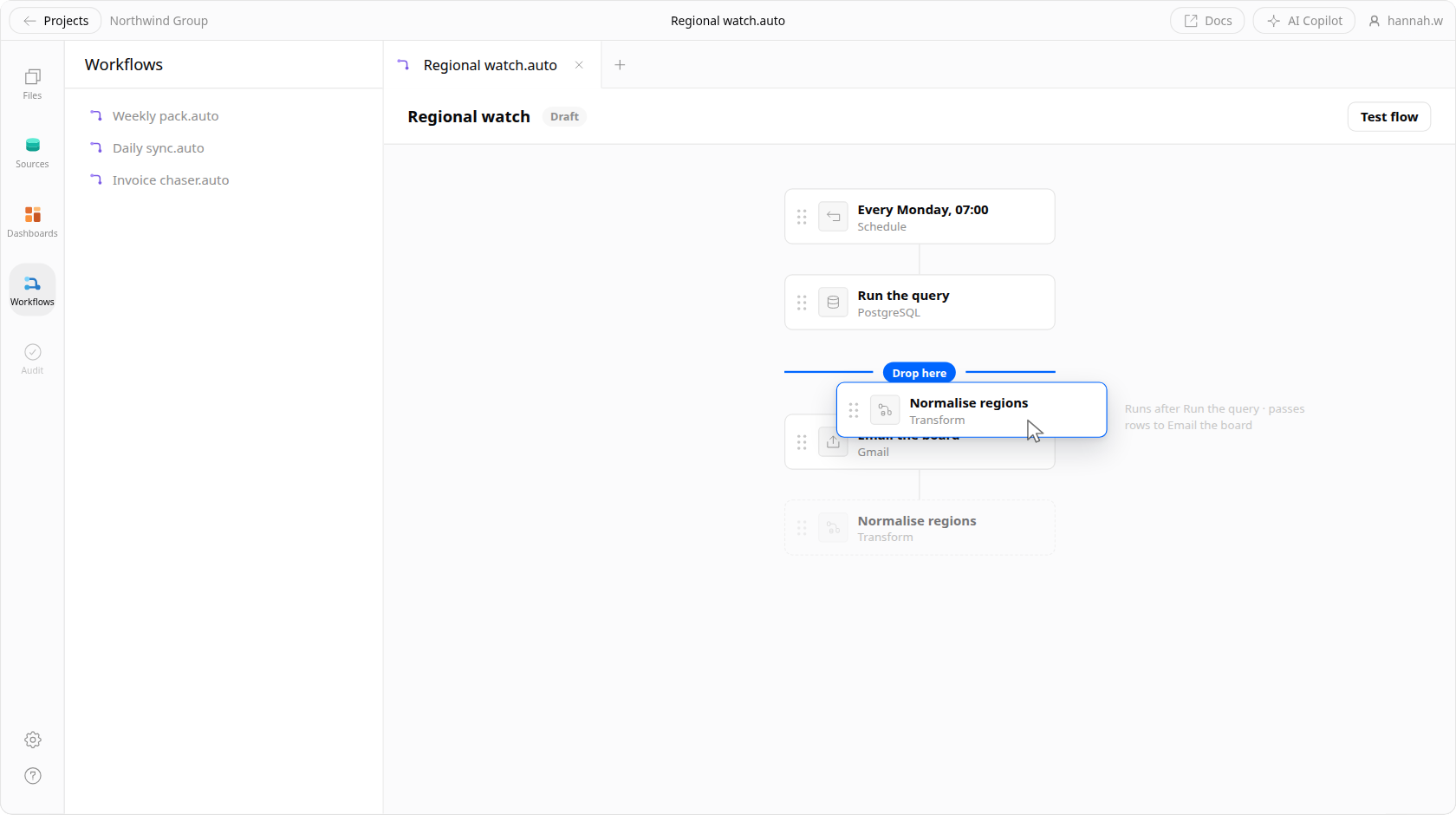
Assemble the pipeline by dragging steps into order — and drop into code for the one step that needs it, without abandoning the builder.
Drag the steps into order and connect them. The plumbing between a query, a transform, and a delivery is handled for you — you describe the sequence, not the glue.
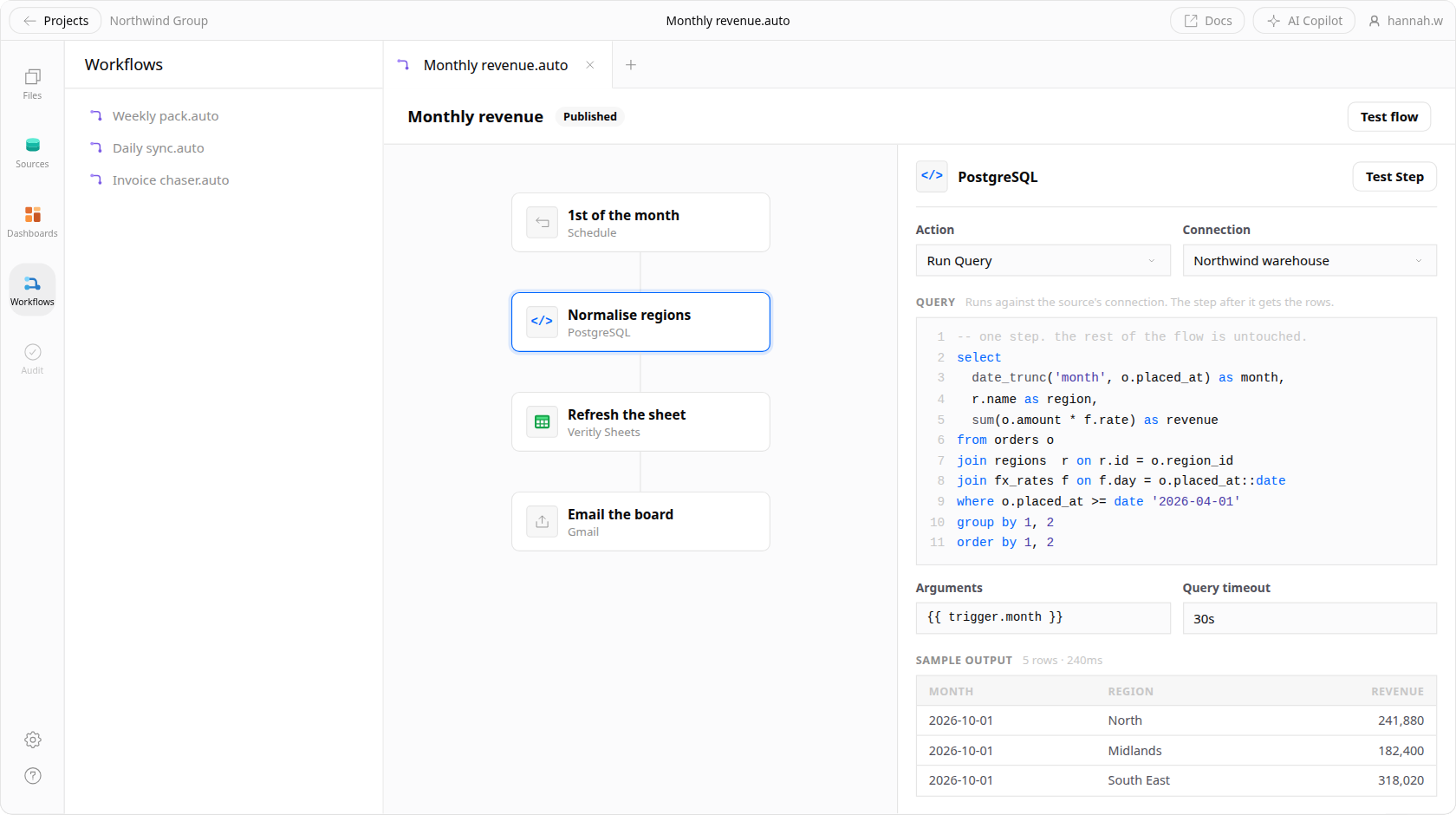
The visual builder covers most of it. When it doesn't, drop into SQL or Python for one step and keep the rest of the pipeline exactly as it was — no rewrite to escape the abstraction.
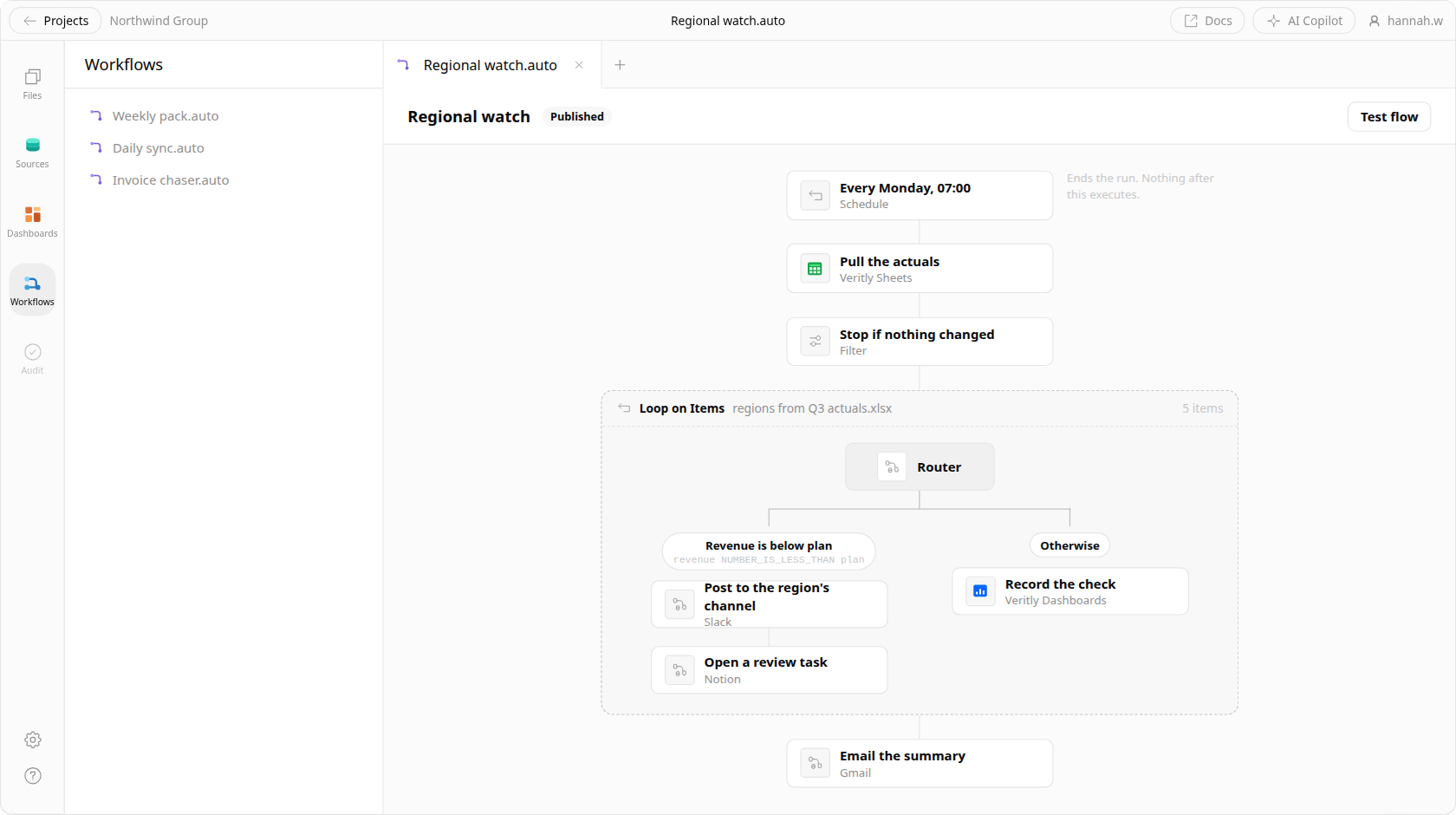
Route on a condition, iterate over a result set, or stop early when nothing changed. Real control flow, so the job matches how the work actually happens.
Run a single step against real data without executing the whole pipeline. See what came out, adjust, and run it again — the loop is seconds, not a redeploy.
Run on a schedule, when the source data lands, when a threshold breaks, or on a webhook from another system.
Drop the agent into a pipeline to summarise a change, classify a batch, or draft the write-up — with the same governance as everywhere else.
The refresh you do every Monday morning becomes a job that already ran before you sat down.
Watch the metrics that matter and get told when one moves — instead of finding out in the meeting.
Wire a pipeline to an endpoint and let another system call it, without standing up a service to host it.
Start from a pipeline that already does most of the job, then point it at your own data.
An automation you can't inspect is one you'll stop trusting. Every run is legible, editable, and repeatable.
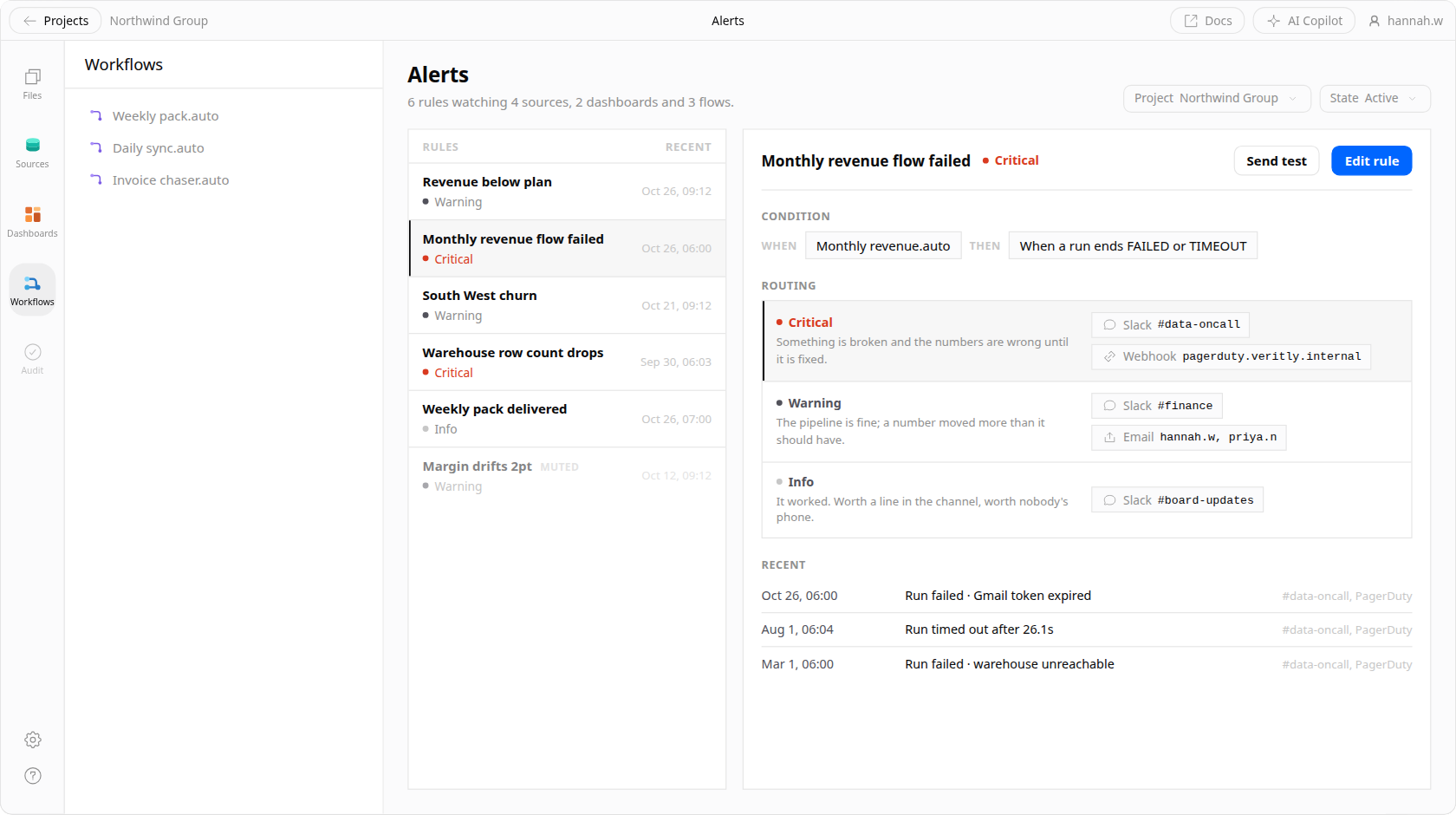
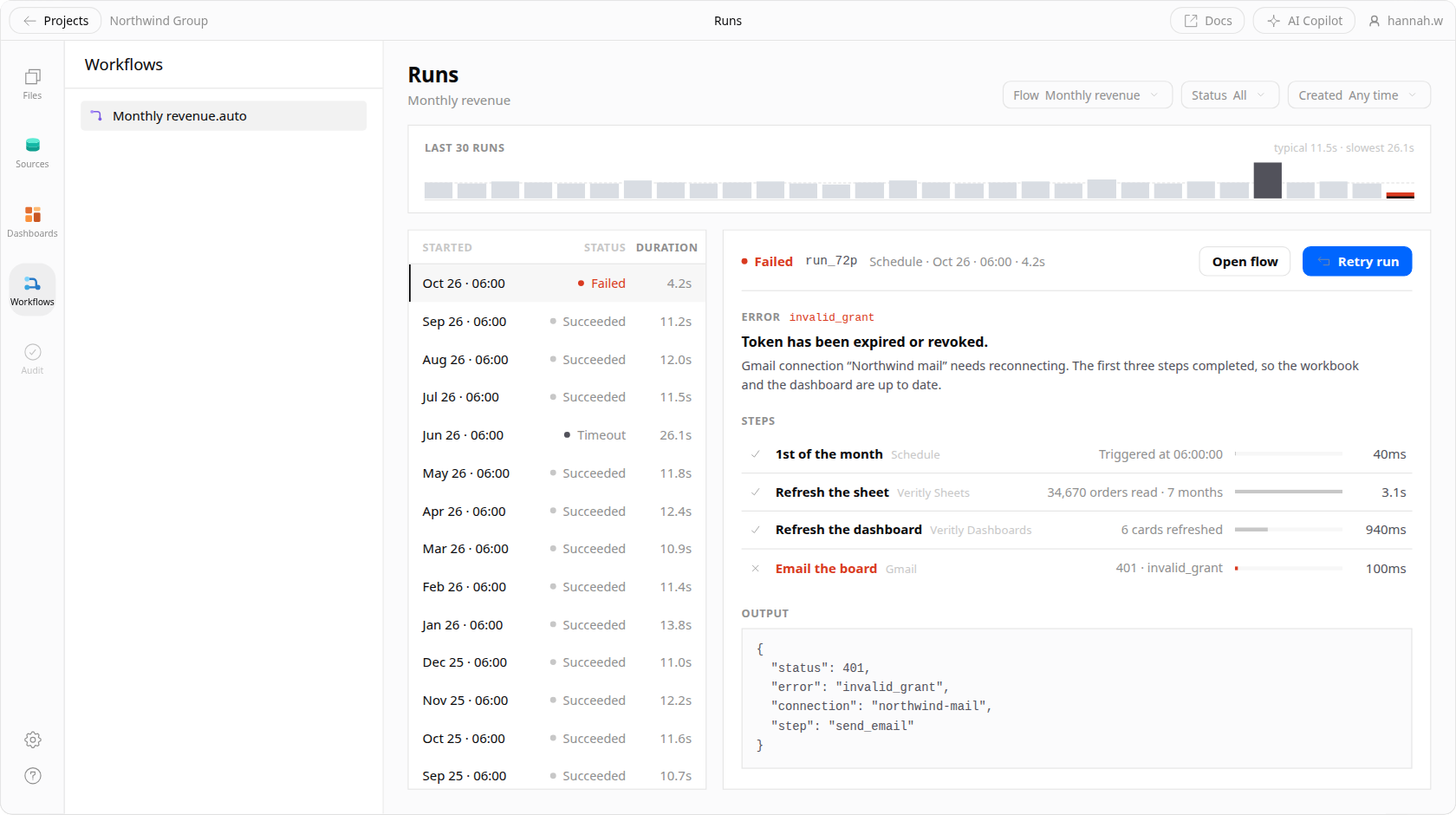
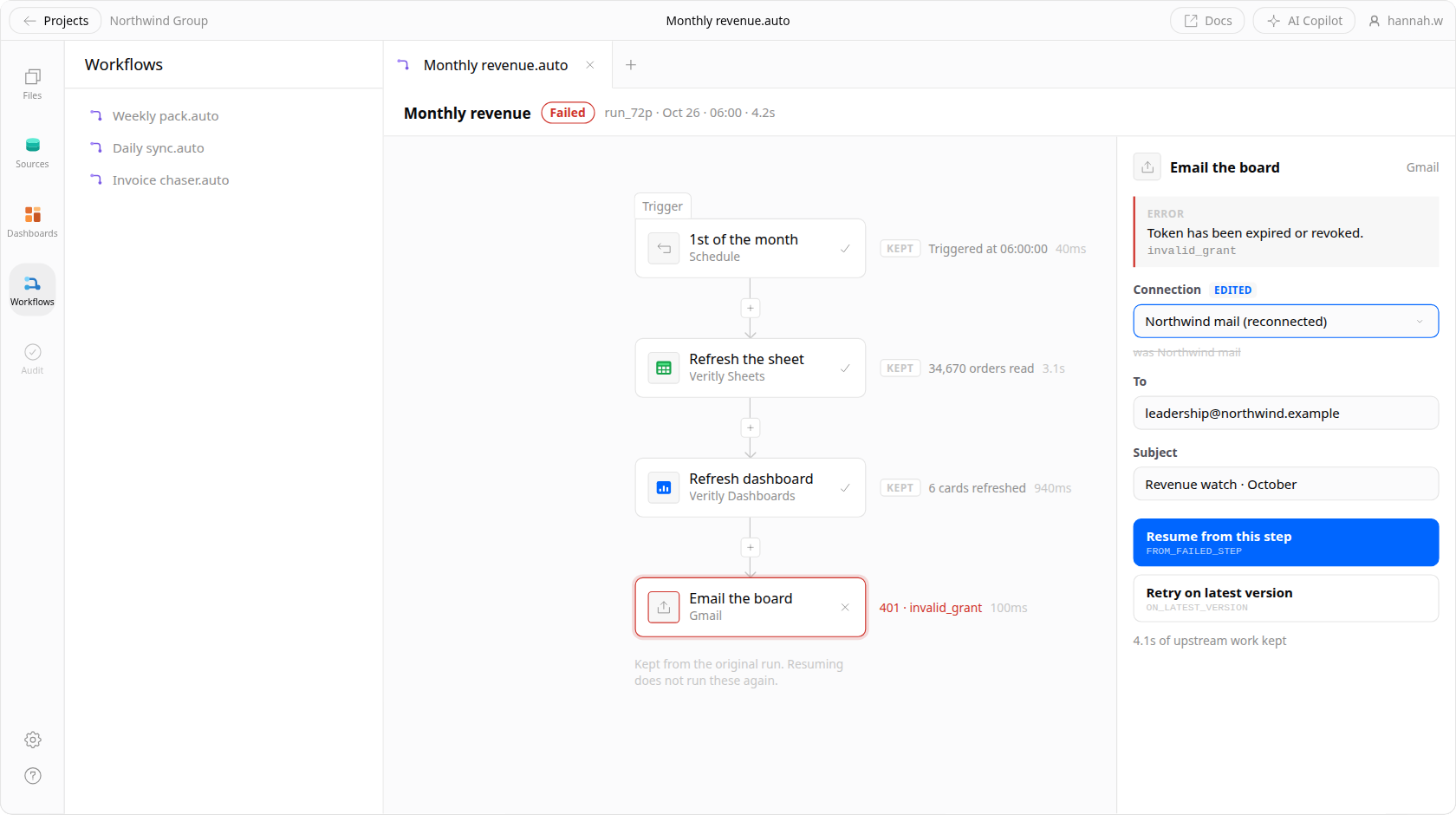
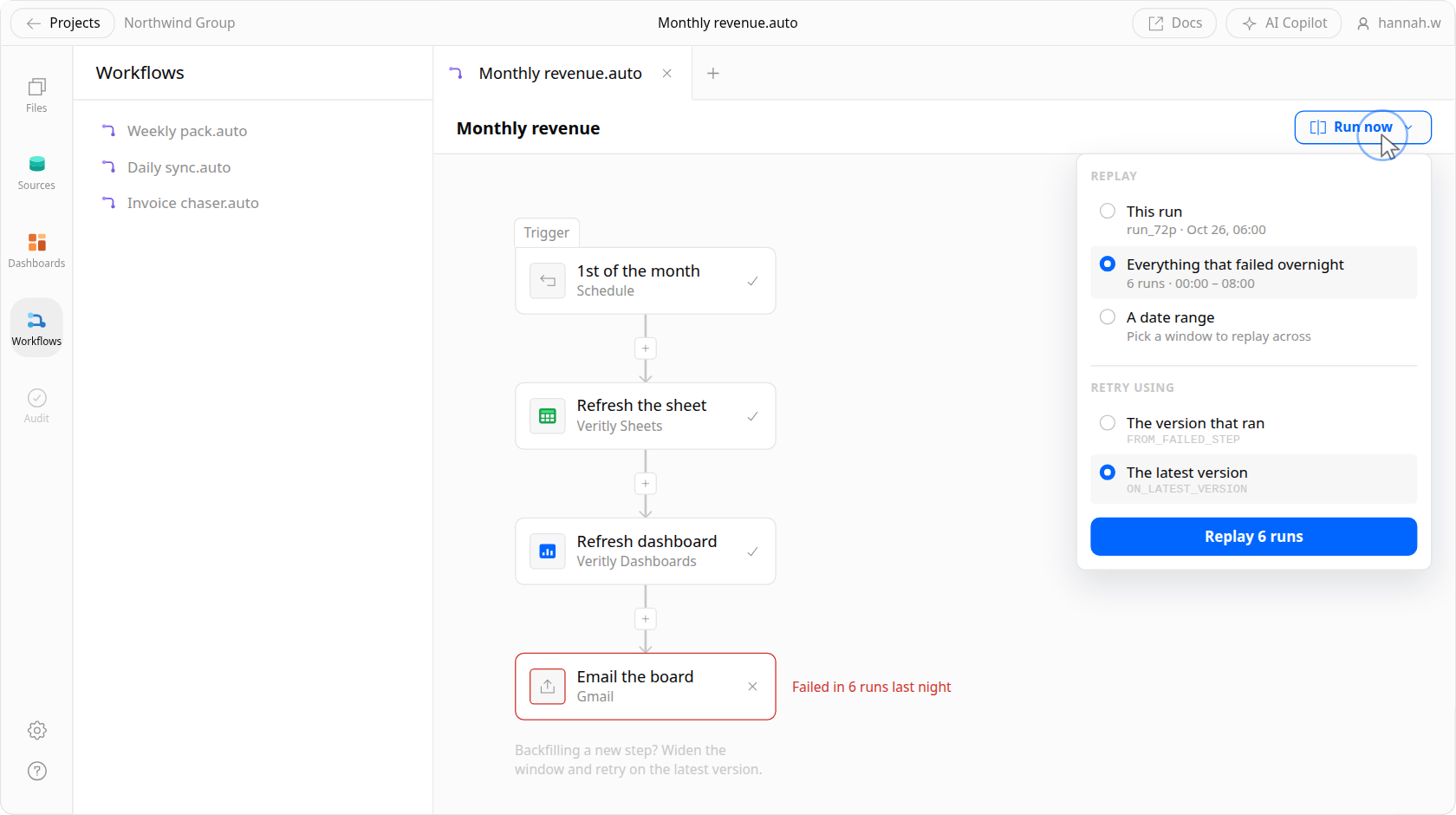
A schedule, a branch, and an alert wired up end to end — then the run that follows, with every step it took visible after the fact.
A pipeline is only worth scheduling if it runs where your security review already looks.
Build on a branch, preview what changes downstream, and promote to production only once the numbers look right.
Pipelines execute against the warehouse you already run, inside the security perimeter your review already approved — your data stays where it is.
A job runs with a defined identity and its own access scope — it can't reach data the owner was never cleared for.
Credentials are referenced, never pasted into a step, and never printed into a log.
Veritly is in private beta. Join the waitlist and we'll bring you in as capacity opens up.